


How to Get a Property Mortgage in Dubai In 2025?
Table of Content
- Introduction: Why property mortgage in Dubai is growing in 2025
- What is a property mortgage in Dubai?
- Why Dubai is a great place for mortgages in 2025
- Property mortgage in Dubai requirements
- How to get a property mortgage in Dubai in 2025 — Step-by-step (points)
- Types of property mortgages available in Dubai
- How to choose the best property mortgage in Dubai (points)
- Using a free mortgage calculator UAE before applying
- Tips to increase your mortgage approval chances (points)
- Common mistakes to avoid when applying for a mortgage in Dubai (points)
- Conclusion & call to action
Why property mortgage in Dubai is growing in 2025?
Dubai’s property market continues to attract residents and international investors. With economic recovery, improved lending products and competitive bank offerings, more buyers prefer financing their purchase through a property mortgage in Dubai rather than paying cash.
Whether you’re a first-time buyer or an investor, understanding the process in 2025 will help you get better rates, suitable loan-to-value (LTV) options, and the best property mortgage in Dubai for your goals.
What is a property mortgage in Dubai?
A property mortgage in Dubai is a loan provided by a bank or Islamic finance institution to fund the purchase of residential or commercial property. You repay the loan monthly (EMI) over an agreed tenure plus interest (or profit rate for Islamic finance).
Key concepts include loan-to-value (LTV), tenure, interest margin, fees (valuation, processing, trustee), and pre-approval. Knowing these basics helps you compare offers and estimate affordability before committing.
Why Dubai is a great place for mortgages in 2025
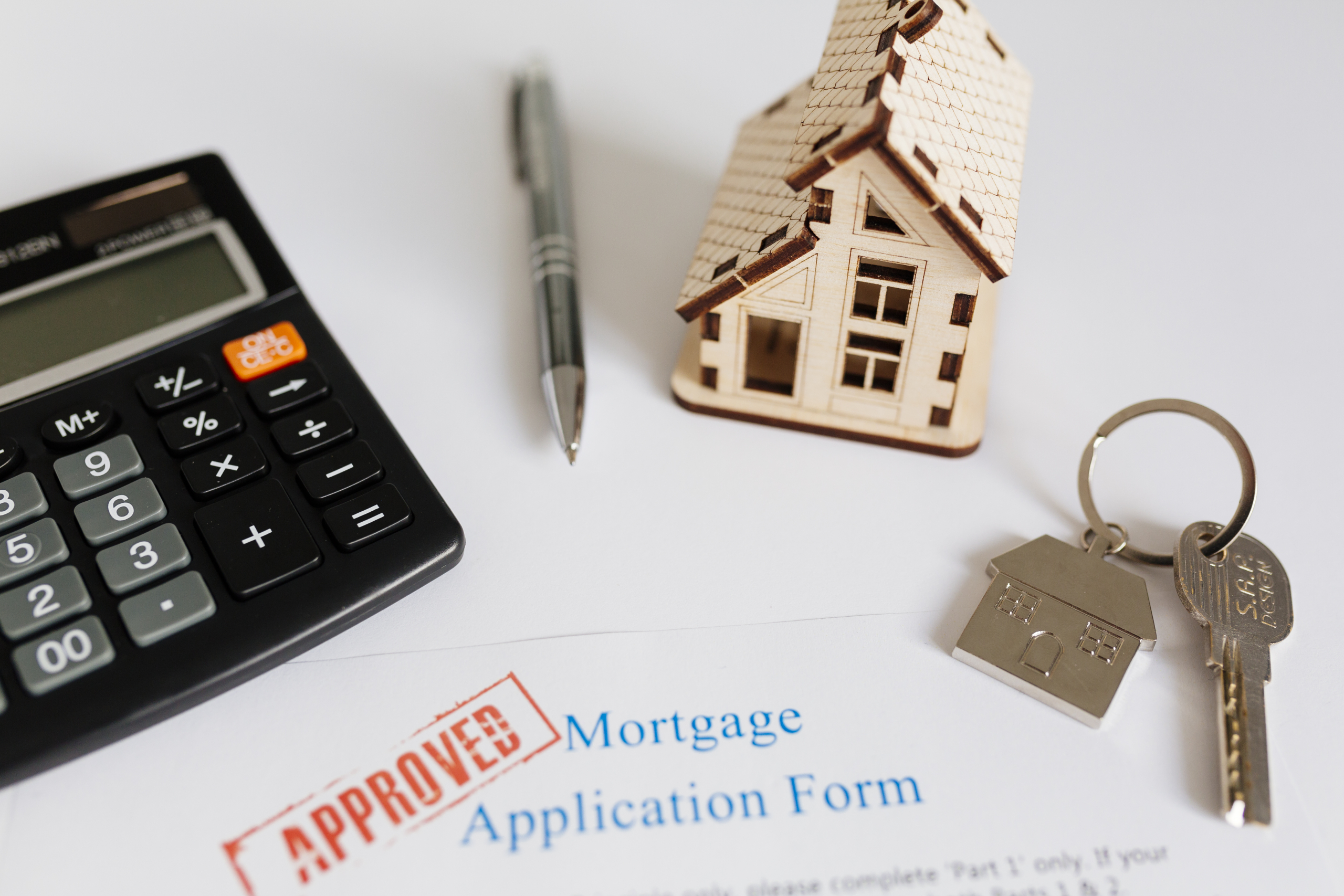
Dubai remains attractive because of tax-free rental income (for many investors), transparent transaction rules administered by the Dubai Land Department, and a wide range of mortgage products, from fixed-rate and variable-rate mortgages to Sharia-compliant home finance.
Banks and brokers are competing on rates and service, which gives buyers bargaining power and access to more flexible mortgage structures than in many other markets.
Property mortgage in Dubai requirements
Minimum monthly income: Most banks require AED 10,000–15,000 for residents and higher for non-residents.
Down payment:
- 20%–25% for UAE residents buying a first property.
- 30%–35% for non-residents or second property purchases.
Valid identification: Emirates ID, passport, and residency visa (for residents).
Proof of income: Recent salary slips (3–6 months), employment contract, or company salary certificate.
Bank statements: 3–6 months of personal bank statements to show consistent income and stable financial history.
Credit score: AECB credit report with a strong score and no recent defaults or late payments.
Debt-to-Income ratio (DTI): Your total monthly liabilities should generally not exceed 50% of your income.
Property documents: Sales and Purchase Agreement (SPA), property floor plan, and title details for ready or off-plan units.
Age requirements: Applicants must typically be between 21 and 65 (salaried) or 70 (self-employed) at loan maturity.
Life and property insurance: Mandatory from most banks before loan disbursement.
Employment stability: Minimum 6–12 months with current employer; for self-employed, audited financials for 2 years.
Additional documents for self-employed: Trade license, MOA, financial statements, VAT returns (if applicable).
UAE residency status: Not required, but non-resident applicants face higher down payments and more documentation.
How to get a property mortgage in Dubai in 2025 — Step-by-step
- Check your eligibility — Confirm minimum salary, residency status, and debt obligations for the bank you prefer.
- Gather documents — Salary slips (3–6 months), bank statements, passport, Emirates ID/visa, tenancy or utility bills, and existing loan statements.
- Use a free mortgage calculator UAE — Estimate monthly EMIs, total interest, and affordability before meeting lenders.
- Apply for pre-approval — Get a pre-approval letter to show sellers you are a serious buyer and to lock in indicative rates.
- Choose the property and sign an SPA — Once under a Sales and Purchase Agreement (SPA), submit it to the bank for valuation and final processing.
- Property valuation & final underwriting — Bank orders valuation, completes credit checks and final approvals.
- Sign mortgage documents & trustee transfer — Attend trustee office for signing and register mortgage with Dubai Land Department.
- Start repayments — Set up salary transfer or standing instructions for monthly EMI payments.
Types of property mortgages available in Dubai
Dubai lenders typically offer: fixed-rate mortgages (rate locked for initial years), variable-rate mortgages (linked to EIBOR or bank base rate), and Islamic home finance (profit-rate structures such as Murabaha or Ijara).
There are special offers for off-plan purchases, buy-to-let mortgages for investors, and tailored products for high-net-worth clients. Compare not only headline interest, but also processing fees, valuation charges, life/PD insurance requirements and early settlement penalties.
How to choose the best property mortgage in Dubai?
- Compare annualised cost — not just headline rate; include fees and charges.
- Check flexibility — partial prepayment options, switch capability, and tenure choices.
- Consider lender reputation — speed of approvals and customer service matter.
- Match product to property type — some products suit off-plan, others better for ready properties.
- Use a broker if unsure — brokers can compare multiple banks quickly and negotiate terms.
Tips to increase your mortgage approval chances

- Reduce existing liabilities — pay down credit cards and consumer loans.
- Keep clean bank statements — show stable salary inflows and savings.
- Improve your credit record — settle small defaults and avoid missed payments.
- Increase down payment — higher equity often lowers interest or improves approval odds.
- Provide strong supporting docs — employment contracts, rental income proof, or business financials for self-employed applicants.
Conclusion
Getting a property mortgage in Dubai in 2025 is straightforward if you prepare: understand the property mortgage in Dubai requirements, use a free mortgage calculator UAE to test affordability, compare lenders to find the best property mortgage in Dubai, and follow the step-by-step process to secure approval.
If you’d like, we can run the numbers for your specific case or guide you to the lenders most likely to approve your application, start with a quick calculation and pre-approval to move faster and smarter.
Get a Free Consultation
FAQs
1. What is the mortgage rate in Dubai 2025?
Mortgage rates in Dubai for 2025 generally range between 3.99% and 5.25%, depending on the bank, borrower profile, loan type, and whether the mortgage is fixed, variable, or Islamic. Rates may vary based on EIBOR movements and bank promotions.
2. Will mortgages increase in 2025?
Mortgage rates may show slight fluctuations in 2025 depending on UAE’s economic conditions and global interest rate trends. If EIBOR rises, mortgage rates may increase; if it stabilizes or drops, rates may remain steady or reduce.
3. How to get a mortgage in 2025?
To get a mortgage in 2025, start by checking eligibility, preparing financial documents, using a mortgage calculator to estimate EMI, getting pre-approval from a bank, selecting a property, completing the valuation, and signing the mortgage agreement at the trustee office.
4. Where will mortgage rates be in 2025?
Most analysts expect UAE mortgage rates in 2025 to stay within the mid-range levels, influenced by EIBOR stability and global economic conditions. Rates may remain competitive as banks continue to offer promotions to attract buyers.


Join The Discussion